Diet, Nutrition, & Natural Health
Archived Posts from this Category
| You are here: Home » OTB Skin Care Blog | Welcome Guest | Login or Register |
Archived Posts from this Category
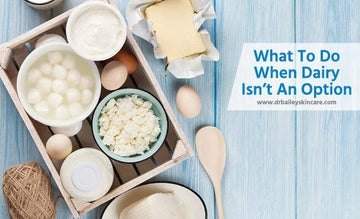
There are foods that cause acne, and dairy appears to be one of them.
For years, dermatologists have told acne patients that foods did not affect their pimples and blackheads. Well, a recent scientific article in the Journal of the American Academy of Dermatology has us rethinking that. Among the dietary advice I’m now giving my acne patients (both teenage and adult acne patients) is that they should limit their milk and cow dairy intake.
Interestingly, it’s not just the fat in the milk, nor is it the added hormones. It seems to be the milk itself.
Reasons that might explain milk’s role in acne include (science geek facts):
Skim milk products seem to be the worst for acne, though all cow dairy milk products may play a role regardless of whether they’re made from whole milk, low fat milk or skim milk. The authors of this new scientific acne diet study conclude that more research is needed to fully understand what role dairy foods play in causing acne, but for now I think there’s enough information to be concerned.
People avoiding dairy need alternate sources of calcium for bone health. Ask your primary care physician for recommendations. Non-milk sources of calcium include calcium supplements, calcium-fortified foods, green leafy veggies like kale and spinach, other veggies like broccoli, whole grains, nuts, and salmon.
Lastly, the diet studies looking at milk and acne have not looked to see if there is a difference between cow dairy and other sources of dairy products like goat milk. Goat milk is significantly different from cow milk in many ways and it will be interesting to see if this makes a difference to acne; my hunch is that it will.
Diet and acne is a fascinating topic. Patients have known there was a link for years and scientists are just now agreeing. I’d love to know if you’ve seen any effects of dairy foods, or any foods on your acne. Please send me your stories via a comment or using the ‘Contact Dr. Bailey’ link in the left margin of this page.
For more on foods and acne see my other posts on the subject:
4 Diet Changes That Can Improve Your Acne; Dermatologist’s Advice
Why Carbs In Your Diet Can Give You Acne
For my recommendations on acne skin care:
How To Treat Acne Now And Prevent ‘Back To School’ Pimples
How To Unclog Your Clogged Pores
Back And Chest Acne; Will They Ruin Your Summer
My Acne Kit For People Allergic To The Usual Acne Products
Reference: Reference: Whitney P. Bowe, MD et. al. Diet and Acne, J of the Am Acad Dermatol 2010;63:124-41
Photos: Much thanks and gratitude to Kyle May and Steve Arnold
0 comments Tuesday 17 Aug 2010 | Cynthia | Acne, Diet, Nutrition, & Natural Health
Once again I’m amazed at how helpful a short cleansing diet is for me. I’ve had a wonderful summer that’s included ‘wining and dining’ my way through vacation and numerous events with family and friends. Well, the result is more aches, pains and just feeling out of sorts for me. As many of you who know me are aware, this is an ongoing issue for me. Patients who are interested in using dietary modifications to address their own health issues ask me about what I do for mine, so this post is a short description of this summer’s dietary cleanse. I’m on day four and it’s really doing the trick!
A quick recap of my story: A few years ago, my aches and pains reached a point where I couldn’t ignore them anymore and I had 2 choices: 1. Take medicine forever and modify my life, or 2. Try to figure out if there was a cause that I could identify and avoid. At the suggestion of a non-medical person I tried a cleanse (see my winter detox cleanse post) and it was like a miracle; by day five I had no aches, pains, arthritis etc. and surprisingly, I felt invigorated. I’ve since worked to figure out what’s with my diet that ‘poisons’ my system and it’s pretty much what’s in the ‘wining and dining’ life that’s such a part of my wine country existence; the more ‘wining and dining’, the more pain and the more ‘out of sorts’ I feel. Just a little and I can recover quickly when I’m back to eating simply, but after two months this summer I’m pretty sore and stiff. I just feel off, and to be honest I think it shows in how I look; my skin’s a little sallow, there are subtle bags under my eyes and I’m packing some unwanted belly fat on my 50-something year old frame. Time to reset my system with a cleanse!
I’m using the same format that I posted in the winter (Martha’s Vineyard Detox) but modified:
After two wonderful months of ‘wining and dining,’ it’s now wonderful to have simplicity, to eat from the garden I work in and to feel refreshed and pain free. I’m thankful that I’ve found a path that works for me. I’d love to hear your stories. Any good or bad experiences with detox diet cleanses? Any dietary triggers to your health problems? Please send them to me as comments or using the ‘Contact Dr. Bailey’ page button on the top left side of this page.
If you found this information useful, you may want to read:
4 Diet Changes That Can Improve Your Acne
Natural Skin Health: Dermatologist’s Diet Recommendations For Healthy Skin
Skip The Tan And Eat Your Veggies For Beautiful Skin Color
Thanks and gratitude to Jill Clardy for the beautiful photo.
0 comments Friday 13 Aug 2010 | Cynthia | Diet, Nutrition, & Natural Health
News flash: refined carbs are linked to acne!
Scientists have found that people who eat lots of highly refined carbs are more likely to get acne. Our modern western diet is loaded with highly refined carbs: cookies, chips, white bread, crackers, cereals, donuts, candy bars, pasta, pizza etc. This means acne should be common, and it is.
It’s high glycemic index foods that are linked to acne. Highly refined carbs have a high glycemic index. Cut down on high glycemic foods and your acne should improve. To understand this, you need to know:
In simple terms, the glycemic index measures a foods ability to quickly increase your blood sugar, which in turn tells your body to make insulin:
When your body has to produce tons of insulin because you ate tons of refined carbs (white flour, sugary foods etc.) then complex things happen with your hormones-including hormones that affect your pores. These hormones are your androgens, (like testosterone), and ‘insulin-like growth factor’. They cause your pores to make blackheads and secrete more oil. They even change what’s in your skin oil, making it more ‘pimple forming’. Basically, eating refined carbs causes your hormones to go crazy, your pores go crazy and you get zits.
Frankly, it’s an amazing example of how complex the body is. Who but a scientist could unravel the connection between you eating a douhnut, increasing testosterone and a growth factor, the end result of which is your skin forming blackheads and pimples.
The bottom line: modern teens, and many adults, eat a lot of highly refined/ high glycemic load carbs -and this causes acne.
The solution: eat foods with a lower glycemic index value:
Good guidelines include my Alkaline Mediterranean Diet.
To help you convert to a lower glycemic diet, there are web sites that list the glycemic values of foods. For a more step-by-step guide you could use The South Beach Diet, which is easy to follow. I’ve done The South Beach Diet before, and I found it balanced and healthy, so long as I ate a lot of veggies when I was on it. It’s a classic example of a low glycemic diet and the book is an easy read. Lastly, there are apps for your smart phone that give you the glycemic value of foods.
If you’ve been eating a ‘normal’ American diet, then starting to eat more veggies, fruit, lean protein and whole grains will probably help your acne. The added bonus is that these are great foods for your overall health and I’ll bet you feel great too!
So, which snack food should you chose:

OR

Please note that scientists are just beginning to understand the connection between high glycemic foods and acne. I expect we’ll be getting even more recommendations in the coming years.
Reference: Whitney P. Bowe, MD et. al. Diet and Acne, J of the Am Acad Dermatol 2010;63:124-41
If you found this information helpful, you may want to read:
4 Diet Changes That Can Improve Your Acne; Dermatologist’s Advice
Back And Chest Acne; Will They Ruin Your Summer
Natural Skin Health: Dermatologist’s Diet Recommendations for Healthy Skin
Photo Attributions:
2 comments Tuesday 27 Jul 2010 | Cynthia | Acne, Diet, Nutrition, & Natural Health
There is mounting scientific evidence that what you eat affects your acne. Knowing what to eat and what foods to avoid can help you get rid of pimples, whether your acne is mild or severe.
The diet/acne connection has been controversial since the 1960s. Scientific studies done in the last 15 years are finally starting to give us answers. People with acne always struggle to figure out which foods worsen their acne, and doctors haven’t been able to give them any guidance until now.
It makes sense that foods play a role in acne but it’s hard to figure this out on your own. That’s because your pimples can take weeks, or even months, to worsen or improve after you make changes in your diet. Knowing what sort of diet you should be eating, and what foods you should be avoiding will help you keep your skin as clear as possible. If you’re using acne treatment medicines or acne skin care products, a good acne diet should also help your acne treatments work better. Many of the dietary recommendations to help your acne are also really healthy for your body overall, so you will most likely feel better and be healthier all around. Most of the studies have been done on teenage acne, but I expect the information applies to adult acne also.
In the July issue of the Journal of the American Academy Of Dermatology there was a scientific paper reviewing all of the modern scientific studies done on the ‘acne and diet’ connection. Based on this most current scientific information, I’ve developed Acne Diet guidelines that I’ll be giving to all my acne patients.
So that yummy hamburger in the photo? It has a high carb bun, full fat cheese, no omega 3’s, no fiber and no antioxidants! It’s a ‘treat’ if you must, but it should not form the basis of your diet if you want to help your acne.
We now know that with acne, like so many other health problems, diet matters. My prediction is that doctors will also find that a healthy acne diet will help acne patients need less acne medicines. This means……
Clearer, healthy looking skin with fewer acne breakouts and less side effects from acne medicines — a dream for people suffering from acne.
If you found this helpful, you may also want to read:
Back And Chest Acne: Will The Ruin Your Summer?
Natural Skin Health: Dermatologist’s Diet Recommendations For Healthy Skin
Reference:
Whitney P. Bowe, MD et. al. Diet and acne. J Am Acad Dermatol 2010;63:124-41.
Photo by Rick
comments off Sunday 18 Jul 2010 | Cynthia | Acne, Diet, Nutrition, & Natural Health
The New York Times online health blog yesterday featured a fascinating article about tanning addiction, Addicted To Tanning? One of the most interesting aspects of the article was a study showing that chronic tanners experienced withdrawal symptoms (jitters and nausea) when they were given the narcotic withdrawal drug called naltrexone, suggesting that pleasure-giving endorphins may be part of tanning addiction.
Well, I just had to post a comment on the New York Times! I’m surprised at what memories came up for me when I read the article and wanted to share my comment with you. Here is the comment I left on the New York Times online health blog concerning the article:
I’m a practicing dermatologist and was probably addicted to tanning as a teen and young adult. I was unable to stop tanning in spite of having surgery for a skin growth that was at first thought to be a very aggressive melanoma. In the end the growth was not cancer, I did not have the lower leg amputation recommended by my first dermatologist, but the scare did not deter me from tanning.
It wasn’t until my dermatology residency in San Diego that I found the resolve to stop; seeing sun damage and skin cancer in patient after patient was like the shock therapy used to help people stop smoking. For the last 25 years I’ve avidly sun protect my skin. Interestingly, my facial skin texture looks younger now than when I was in my 20’s and tanning. Also interesting is that my family now has a strong family history of melanoma and I’m convinced that if I had continued tanning I probably would not be here today.
As for vitamin D, fair skin makes all it needs in the first few minutes of sun exposure. Continued exposure actually starts to break the vitamin D down. Knowing that sun protection is never perfect, I recommend sun protecting your skin, and the ‘margin of error’ usually lets enough sun into your skin for vitamin D production. To really know what your vitamin D needs are, get it measured and ask your doctor for advice. I find there is very little correlation between patients that sun protect or tan and vitamin D levels. My specific advice and more information on vitamin D is available on one of my recent blog posts.
It’s funny that I didn’t go into dermatology because of this early near brush with cancer. It’s also funny that it took my residency experiences to get me out of the sun, now I know why.
You may also want to read my sun protection advice:
5 Steps For Smart Sun Protection
If You Want A Nice Sunburn Use Last Year’s Sunscreen
How To Pick The Best Sunscreen
Are Your Summer Clothes Good Enough To Be Sun Protective Clothing
Photo Attribution:
2 comments Tuesday 22 Jun 2010 | Cynthia | Diet, Nutrition, & Natural Health, Skin Problems & Advice, Sun Protection Advice
|
Copyright © 2008 - 2009 OTB Skin Care: Facial Skin Care, Acne Treatment, and Sun Protection Kits - All Rights Reserved Dermatologist Dr. Cynthia Bailey · 7064 Corline Court #C, Sebastopol, California 95472 · Phone: (707) 829-5780
The information presented on OTBSkincare's Blog and web site, and any related links, is provided for general information and educational purposes only and are the opinions of Dr. Cynthia Bailey. Consult with your physician or health care provider for any specific medical conditions or concerns that you have. Never disregard professional medical advice or delay in seeking it because of something you have read here. Use the information and products on this site at your own risk. Use of this site indicates your agreement with these statements and the Terms and Conditions of OTBSkincare.com. If you do not agree to all of these Terms and Conditions of use, please do not use this site! |