
You are here: Home » OTB Skin Care Blog Welcome Guest | Login or Register

Ask Dr. Bailey

How To Get The Most Out Of Your Anti Aging Skin Care

askdoctorbailey2Hi Dr. Bailey,
I am 50 years old and currently using your Anti-Oxidant Kit without Glycolic Acid along with tretinoin 0.5% at night.  I really like it very much. I recently introduced the C/R/S Cell Anti Aging Serum 15%. I am finding this to be somewhat drying and I’m wondering if this is a normal reaction to this product?  Also, I’ve started out by using it every other day. Will I still reap the benefits by using it this way or is everyday the way to go?

Another question I have is about the Buf-Puf. Can this be used every day? I am using the Replenix Scrub twice a week which is quite the work horse! I have somewhat sensitive skin so I have to be careful not to overdo.

I love your site and your blog! The information has been incredibly helpful.

Thanks!
Robin

Dear Robin,

This is a great practical question.  You’re using the best and most powerful anti aging skin care products made.  The dryness you describe sounds like what I see when these products push up against the limits of what a person’s skin can currently handle. By taking little breaks in how often these products are applied, the skin can gently adjust.  When the skin is ready, it will probably be able to handle more regular use.

Occasional dryness and irritation happens to almost everyone using strong anti aging products.  That’s because both vitamin C and glycolic acid have an acid ph which means they’re sort of like lemon juice.  Add to this the fact that tretinoin (Retin A and Renova) and glycolic acid both powerfully exfoliate dead skin cells to uncover the underlying soft new cells and you can see why an acid ph can occasionally cause chapping and dryness.

Here’s what I tell my patients who are experiencing dryness or irritation from their professional anti aging skin care products:

  • If the dryness occurred after adding a new product, or increasing the strength of a product they’ve been using successfully, then stop just that one product until the skin goes back to normal.  This may be a few days or as long as a week or two.  When the skin is ready, resume using the product just once or twice a week.  Slowly increase to everyday use as the skin adjusts.  If the skin again becomes dry and chapped then take another break until the skin settles down, then restart.  The trick is to find that application frequency and product strength for your particular skin.
  • When a person’s skin is really chapped, sunburned or broken out with a rash for any reason, they need to entirely stop most of their anti aging products until the skin has entirely returned to normal.  In this case, I recommend washing with a gentle cleanser like Noble Zinc Soap or Toleriane Cleanser applying Replenix CF Cream, a gentle moisturizer like Glycolix Elite (without glycolic acid) and sunscreen during the day.  When their skin is totally back to normal they can very slowly resume their other anti aging products-as tolerated.  It’s important not to apply vitamin C, tretinoin or glycolic acid to irritated skin because it makes the irritation worse.

Your second question about whether you’ll benefit from vitamin C if you don’t use it everyday is a question many people ask me.  Interestingly, vitamin C anti aging products like C/R/S don’t need to be used every day because tests have shown that 50% of the high skin concentrations obtained from applying professional vitamin C products are still present in the skin after 4 days.  I tell my patients to apply C/R/S at least three times a week, and especially when they’ll be in the sun; vitamin C is a great second defense against free radical sun damage- and we want that.

Your last question is about the additive benefits (or problems) from multiple exfoliation products.  Yes, you can overdo it.  You have to figure where that perfect amount of exfoliation is for your skin.  Exfoliated skin is soft and luminous, but it’s more sensitive and requires special care. For most people I find that using Replenix Scrub twice a week OR gently washing with a Facial Buf Puf every day is usually just about right.

I hope this information is helpful.  Thanks for sending me a great question that brings to light something many people experience with professional anti aging skin care products.

Warm Regards,

Cynthia Bailey MD, Dermatologist

Disclaimer: Please realize that availing yourself of the opportunity to submit and receive answers to your questions from Dr. Bailey does not confer a doctor/patient relationship with Dr. Bailey. The information provided by Dr. Bailey is general health information inspired by your question. It should not be a substitute for obtaining medical advice from your physician and is not intended to diagnose or treat any specific medical problem (and is not an extension of the care Dr. Bailey has provided in her office for existing patients of her practice). Never ignore your own doctor’s advice because of something you read here; this information is for general informational purpose only.

Choosing The Right Makeup For Post Menopausal Skin

askdoctorbailey2Dr. Dr. Bailey:
Your antioxidant skin care program has been such a help for my post menopausal skin.  Thank you.  I was wondering if you have any suggestions regarding cosmetics for flaky skin that is prone to breaking out.  Is there any difference between eye shadows, liners, powder and blushes or is one just as good as the other as long as the skin care program is sound?
Thank you, Helen

Dear Helen,
I’m so glad to hear that My Antioxidant Kit is helping your post menopausal skin! Thank you for your feedback.

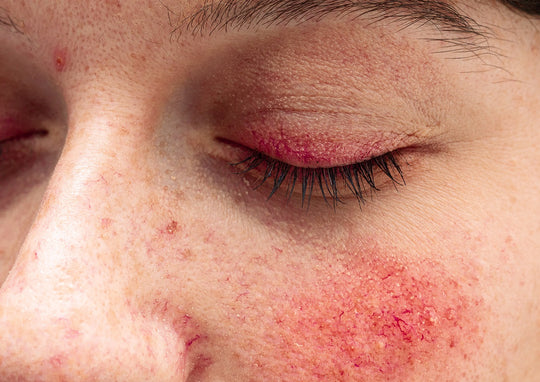
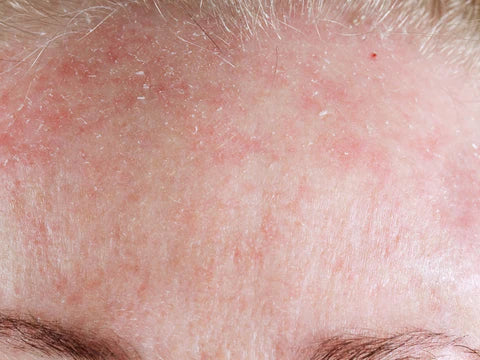
I wonder why your skin is flaky and breaking out.  Common skin conditions that occur as we age and that cause facial skin to flake and break out include rosacea and seborrheic dermatitis.  You may want to see your dermatologist to see if you may have one of these conditions.

What ever the cause of your skin problems, it’s hard to put makeup on flaky skin. Makeup color goes on heavier in the scaly areas and looks uneven.  To create an even skin surface before putting on makeup many of my patients find it helpful to first cleanse and gently exfoliate their skin with nondrying  Noble Zinc Soap and the Facial Buf Puf.

The second issue is that adult skin that is prone to ‘breaking out’ is often actually sensitive and easily irratated.   The goal with makeup is to create the aesthetic appearance  you want without irritating your skin problems. This means figuring out what products flair up your skin and avoiding them.   Look for products that claim to be gentle and hypoallergenic.   Anti aging ingredients in makeup can be irritating so I recommend avoiding them; they won’t be present in therapeutic amounts and you’re already using great anti aging products in the antioxidant kit. This goes for your moisturizer as well.  Your moisturizer and makeup should sooth and support the antioxidant kit products, not irritate your skin; they should ‘dial in’ the moisture and appearance you want- and that’s all!

My favorite type of gentle, hypoallergenic makeup for sensitive skin is mineral make up. I especially like the loose powders. Powders don’t need to be preserved like liquids do and so they have fewer chemical ingredients that could irritate your skin.  There are great foundations, eye shadows and blushes that are loose or compressed powders and that are made with high quality natural ingredients. They look great and the minerals often provide additional sun protection on top of your sunscreen giving you an anti aging bonus. Eyeliners on the other hand have to be moist or waxy which means they’ll need some chemical preservatives.  The good news is that eye products are formulated to be extremely gentle so they are rarely a problem for sensitive skin.

Mineral makeup brands that I or my patients have had consistently good experience include:

  1. Drug store brands like Almay and Neutrogena and Physician’s Formula.
  2. Department store brands like Clinique and Prescriptives.
  3. Spa and boutique brands like Bare Minerals, Glo Minerals and Jane Iredale.
  4. Natural food store brands like Dr. Hauschka, Hemp Organics and Mineral Fusion.

There are many other good mineral makeup brands that I haven’t listed.    Try the products before you buy them.   Ideally you want to wait 24 to 48 hours to see if your skin tolerates a product before you buy it.

One last important point about makeup and post menopausal skin is that we often should use less of it as we age. This seems counter-intuitive but unfortunately makeup can accentuate wrinkles and sagging skin.  This is because makeup products migrate into our creases during the day, making them more visible. The lesson here is that there’s no substitute for powerful anti aging skin care and good sun protection, like the Antioxidant Kit that your using.

I hope this helps.

Warm Regards,

Cynthia Bailey MD, Dermatologist


If you found this information helpful, you may also want to read:

Facial Skin Care For Problem Skin With Rosacea, Seborrhea and Clogged Pores

Disclaimer: Please realize that availing yourself of the opportunity to submit and receive answers to your questions from Dr. Bailey does not confer a doctor/patient relationship with Dr. Bailey. The information provided by Dr. Bailey is general health information inspired by your question. It should not be a substitute for obtaining medical advice from your physician and is not intended to diagnose or treat any specific medical problem (and is not an extension of the care Dr. Bailey has provided in her office for existing patients of her practice). Never ignore your own doctor’s advice because of something you read here; this information is for general informational purpose only.

Prescription Medicines, Medical Problems and a Detox Cleansing Fast

askdoctorbailey2Dear Dr. Bailey,
I like the idea of a cleanse, especially to jump start a diet but I have to take medication twice a day with food and not sure how that would work. I also have COPD and high blood pressure and not sure if it would affect that also. Thanks for any input.
Nina

Nina,
A detox cleanse can mean a lot of things, all the way from fasting on water to simply eating and drinking only pure and chemical free organic foods. The Detox Cleansing Fast I do is somewhat in between.

The important point in doing a cleanse is always that it be safe. That’s one of the reasons that I always adjust my activities when I do a cleanse – I just don’t have much energy on a cleansing fast and I need to be careful.

The second key point is that after a detox cleanse I have a familiar and wholesome diet to come back to when the cleanse is over. If not, then I don’t maintain the benefits of the cleanse and my health problems come right back.

Your medications and medical issues mean that for you to safely consider a rigorous detox cleansing fast like I do, you would definitely need your doctor’s supervision. I would guess that your doctors would even caution you against doing a cleansing fast and instead recommend dietary changes that are much gentler. My health issues are different; I don’t take medicines or have complex metabolic health issues, all of which would impact the safety of a fast. It’s important to understand that doctors carefully adjust a patient’s medicines based on what they know about that person’s baseline lifestyle. A cleanse would be a significant change in that lifestyle meaning that your doctors would need to monitor you and undoubtedly adjust your medicines as your body and activities changed. Talk with your doctors regarding how you might go about safely modifying your diet to make it pure and chemical free and then have them monitor you as you begin to make these changes in your lifestyle.

The second important point in doing a detox cleanse is that it’s only of benefit if the diet one comes back to afterwards is healthy and pure. In my experience, this is what makes the cleanse such a powerful tool to improve my health issues. The book I mention in the Detox Cleansing Fast post talks about this in detail and I recommend that you read that book before considering a cleanse. The author talks about people making themselves ill by eating the wrong foods too soon after a cleanse.

I’ve written about the 3 most important features of a healthy diet in my opinion: 1. the Alkaline Mediterranean Food Pyramid, 2. eating foods that are fresh and organic, 3. adding natural probiotics foods to the diet. Try to create this healthy diet before considering a cleanse, so that it’s easy to come back to afterwards. I would recommend looking at these posts to see what I think is an ideal diet for good health. See how you might gradually adapt your current diet to fit these concepts. Have your doctors monitor your medicines and go slowly. Switching from the normal American diet to a heavily plant based organic diet that includes only moderate amounts of healthy fats and animal products is a big shocker to the body. It will undoubtedly change your medicine dosages so again your doctors need an active role. Again, these dietary changes are important. They take time to figure out and implement in your lifestyle, and will undoubtedly impact your medicine dosages.

Remember, it’s so easy for us Americans to grab convenient processed foods filled with sodium and chemicals. Doctors adjust medicine dosages to handle this American diet. When a person stops eating all our modern food chemicals, their medicine dosages need to be changed. It’s all part of the ‘detox’ and it’s why we feel so different eating a wholesome low chemical diet. In my personal experience this is why I feel so much better when I’m careful with my diet, and why I feel so lousy when I grab the convenient, delicious processed foods that are everywhere.

Best of luck, this is a huge but worthwhile project. I admire you for considering it.

Warm Regards,

Cynthia Bailey MD, Dermatologist

Disclaimer: Please realize that availing yourself of the opportunity to submit and receive answers to your questions from Dr. Bailey does not confer a doctor/patient relationship with Dr. Bailey. The information provided by Dr. Bailey is general health information inspired by your question. It should not be a substitute for obtaining medical advice from your physician and is not intended to diagnose or treat any specific medical problem (and is not an extension of the care Dr. Bailey has provided in her office for existing patients of her practice). Never ignore your own doctor’s advice because of something you read here; this information is for general informational purpose only.

Facial Skin Care for Problem Skin with Rosacea, Seborrhea and Clogged Pores

askdoctorbailey2Dermatologist Dr. Cynthia Bailey answers your questions about skin care and skin problems

Dear Dr. Bailey,

I have facial seborrhea dermatitis, rosacea and clogged pores in the T zone, plus age spots. I am 49 years of age. I recently tried Obagi Blender which caused acne. I have Solbar sunscreen which also causes some breakout and seems a bit heavy/oily. With my skin so problematic and sensitive, I thought to try your green tea cream, zinc soap for the seborrhea, but am unsure about sunscreen and when to work on the congestion and age spots. My dermatologist really isn’t into cosmetic treatments, but does have me on Oracea for my rosacea, but is not approved for long-term use. Complicated, I know, but hope you can help. I though about Rodan + Fields new line, but it has fragrance and is really pricey.

Thanks, Lisa

Dear Lisa,

You sure have the double, triple, quadrupedal whammy of facial skin issues-and your not alone!

I can’t tell you how many patients I see with exactly your combination of skin problems, including myself.  You have tried some good products, you have some good ideas and your on the right track.  Assuming that your doctor has correctly diagnosed your rosacea and seborrheic dermatitis, I totally agree with your idea to try the Noble Zinc Soap and the Replenix CF Cream to quiet these skin conditions.

I have found Replenix CF Cream and Noble Zinc soap to be wonderful skin care products for helping to calm both rosacea and seborrheic dermatitis. These are also the foundational products for many of my anti aging skin care regimens.  They are oil free and should not clog your pores.  Plus, they are non irritating, and in fact very soothing for facial skin rashes.  Both of those are key characteristics for skin care product tolerance in people with sensitive skin.

I also applaud you for your determination to use a high quality, micro zinc oxide sunscreen like Solbar Zinc.  I love this product, but it does have a heavy feel.  It is actually oil free, but the water resistant base feels oily.  I recommend Solbar Zinc for wet, sweaty activities, but most people don’t use it as their every day sunscreen in my practice.  I recommend instead that you try the Citrix Sun Screen. It has a drier feel yet the same excellent UVA and UVB protection as the Solbar Zinc because it too is a micro zinc oxide sunscreen.  Patients find that it is non-irritating, doesn’t sting eyes and won’t clog pores.

I can’t stress enough the need to wear a  5% or higher Micro Zinc Oxide Sunscreen EVERYDAY!

Broad spectrum UVA and UVB sunprotection is critical for anyone who wants to lighten their age spotsMicro Zinc Oxide is the best sun screen ingredient for complete, broad spectrum UVA and UVB sun protection in my opinion. Sunscreen needs to be applied every day, regardless of what activities are on the adgenda and regardless of what time of year it is.

I tell people to put their sunscreen on with their skin care products first thing in the morning.  I have them wash, put on Repleinx CF Cream followed immedietly by any other products they use. They then finish with Citrix.  Make-up of course goes on top as the last product applied.  No need to wait and let things dry.  Skin products are like the different foods we eat, they all get mixed up when they reach their final destination so they can be applied together.

Your last question is about  products that actually fade age spots.  Picking age spot fading products is tricky for people with rosacea and seborrheic dermatitis because these conditions make the skin sensitive, and age spot lightening products are usually irratating.  You need to chose these with your doctors help.  My favorite anti aging and age spot fading skin care product for patients with rosacea and seborrheic dermatitis is Retin A (tretinoin) at the lowest strength.  I find that if I can really quiet down the 2 rashes, I can sneak up on the skin and get it to tolerate the Retin A (starting twice a week and working up slowly as tolerated).  This is tricky though, so you need your doctors help.  Plus, Retin A is a prescription, Retin A use makes skin more sun sensitive and it can’t be used when pregnant.

Bring this information to your doctor and see what he/she has to say.  Best of luck!

Warm Regards,

Cynthia Bailey MD, Dermatologist

Disclaimer: Please realize that availing yourself of the opportunity to submit and receive answers to your questions from Dr. Bailey does not confer a doctor/patient relationship with Dr. Bailey. The information provided by Dr. Bailey is general health information inspired by your question. It should not be a substitute for obtaining medical advice from your physician and is not intended to diagnose or treat any specific medical problem (and is not an extension of the care Dr. Bailey has provided in her office for existing patients of her practice). Never ignore your own doctor’s advice because of something you read here; this information is for general informational purpose only.

If you found this information helpful, you may also want to read:

Early Skin Cancer Detection Saves Lives; You Need An Annual Full Skin Exam

Dermatologist’s Tips for Dry Flaky Skin On Your Face and Scalp; Tis the Season for Seborrhiec Dermatitis

Combination Anti Aging Skin Care Treatment with Tretinoin and Glycolic Acid

askdoctorbailey2Dermatologist Dr. Cynthia Bailey answers your questions about skin care and skin problems

Hi Dr. Bailey,

I am 49 years old. I use Tretinoin 0.5% for sundamage and aging purposes. Is it possible to add Glycolic acid to my routine also?  I am wondering if there is a Glycolic face cream I can add?During the day I am currently using Glycolix Fortified Facial Cream for Dry Skin and the Citrix Antixodant SPF30 sunscreen.

Thanks so much!

Heather

Dear Heather,

I love both tretinoin and glycolic acid for sundamage and anti aging skin care.  Tretinoin and Glycolic acid are both powerful anti aging skin care ingredients that make very noticeable improvements in the appearance of the skin by:

  • Lighten age spots
  • Smooth and exfoliate the skin giving it a more luminous character
  • Work to reverse wrinkles by building new collagen just underneath the surface of the skin.

The ultimate anti aging skin care product combo is to use both of these and throw in a strong professional level vitamin C product every 4th day. Each of these ingredients works to rejuvenate the skin by a different mechanism, and thus combination therapy yields more age reversal that using just one alone.

Unfortunately, all these highly effective anti aging ingredients are irritating.  Only people with really tolerant skin can combine tretinoin and glycolic acid therapy.  People with sensitive skin (especially people with rosacea, eczema or facial seborrheic dermatitis) typically have to pick either tretinoin OR glycolic acid.  People who can’t tolerate using tretinoin with glycolic acid can sometimes tolerate using just one of these ingredient with a topical vitamin C product.  This is because the vitamin C is not exfoliating.  Vitamin C is, however, irritating to exfoliated skin so it’s still a little tricky.

The reason that it’s tricky to combine these wonderful and effective anti aging ingredients is that the glycolic acid and the tretinoin are both very exfoliating.  Exfoliated skin has a more refined and luminous appearance, but also  absorbs things faster.  Because the glycolic acid and the vitamin C both have an acid pH, they can be irritating to exfoliated skin.  In addition, tretinoin causes a ‘break in’ rash (called retinoid dermatitis) when a person first starts using it.  The skin adjusts in about a month and the retinoid dermatitis typically goes away, but skin with retinoid dermatitis gets really irritated from the acid pH of the glycolic acid or the vitamin C products.

When people want to try to combine anti aging home therapy, my favorite method is to start them on the tretinoin at night for at least 2 months. When their skin has adjusted to the tretinoin, we add professional level glycolic acid during the day as I describe below.  When the combination is tolerated and can be applied every day, then we throw in the CRS Vitamin C at least twice a week in place of the glycolic acid.  To help the skin tolerate this powerful anti aging treatment, I add Replenix CF cream twice a day.  I’ve found Replenix to really increase a person’s ability to handle more anti aging skin care products than it otherwise would.

When a person wants to try combining glycolic acid and tretinoin therapy I recommend they start with one first, let the skin adjust for a month or two, then add the second. They use the second product a few days a week to begin with.  Gradually, as their skin adjusts to the new second product, they work up to using the second product every day.  If parts of their face do well with the combination but other areas become irritated, then they don’t put the second product on the sensitive areas.  When their skin gets irritated for any reason, they need to stop both products until the skin is back to normal, at which point they repeat this process over a shorter period of time.

Of course, any exfoliating anti aging treatment means that a person MUST wear a 5% or more microsized zinc oxide sunscreen like Citrix every day, all year, regardless of their planned activities.  Because exfoliated skin allows more damaging sun rays to enter the skin, I also want people to wear hats and try to keep their face out of direct sunlight as much as possible.  This is important for skin cancer prevention, and it’s also critical for their anti aging skin rejuvenation to be effective.

Because combination therapy is complicated and involves layering products on the skin, I write out the order of product application for my patients.  The typical product application regimen that I recommend is:

Morning

  1. Wash with a gentle cleanser (eg. Noble Zinc Soap or Toleriane Cleanser)
  2. Replenix CF Cream
  3. Glycolic acid product (choose based on your skin type) or CRS Vitamin C Cream
  4. Moisturizer if needed (eg. Glycolix Ultra Lite or Fortefied, or your favorite non copper containing moisturizer)
  5. 5% or more micro sized zinc oxide sunscreen (Citrix is the most popular)

Night time

  1. Wash with a gentle cleanser as above
  2. Replenix CF Cream
  3. Moisturizer of choice if needed
  4. Wait 15 minutes then Tretinoin (begin every 3rd night and gradually work up to every night)

If a person finds that they are unable to tolerate both tretinoin and glycolic home therapy, then I recommend they try combining tretinoin at night, CRS vitamin C during the day and have occasional glycolic acid peels done carefully by a skin care professional.  Again, the exfoliation achieved with tretinoin makes the peels tricky and the skin care professional needs to be experienced with this situation.  The risk is that the peel may be go too deep and injure the skin, potentially causing scarring.  Remember, professional skin care is capable of creating powerful skin rejuvenation, but there are risks; professional anti aging skin care products have to be strong in order to overcoming nature, it’s not like buying some fluffy, ineffective products at the department store.

I wish you the best of luck.  Be sure to talk with your tretinoin prescribing doctor about what you’ve learned here. This information is general information and I can’t promise it is appropriate for your specific skin.

I hope you found this helpful and informative.  Thanks for sending me your question.

Warm Regards,

Cynthia Bailey MD, Dermatologist

For more information on anti aging skin care you may want to read:

Dermatologist’s Own Personal Tricks to Control Age Spots, Sun Spots and Uneven Pigmentation

Now Between Fall and Early Spring is the Best Time Of Year To Reclaim Soft Skin and Treat Age Spots

To send me your skin care questions or to ask me to address a specific dermatology topic, please use the  ‘Contact Dr. Bailey page’ on the left sidebar or click here to load the page.

Disclaimer: Please realize that availing yourself of the opportunity to submit and receive answers to your questions from Dr. Bailey does not confer a doctor/patient relationship with Dr. Bailey. The information provided by Dr. Bailey is general health information inspired by your question. It should not be a substitute for obtaining medical advice from your physician and is not intended to diagnose or treat any specific medical problem (and is not an extension of the care Dr. Bailey has provided in her office for existing patients of her practice). Never ignore your own doctor’s advice because of something you read here; this information is for general informational purpose only.

Next »